
Your engine needs more than fuel to produce power—it also needs a steady supply of clean air.
The air filter is the component responsible for cleaning that air before it enters
the engine. It may look like a simple part, but it plays an important role in engine performance,
fuel efficiency, and long-term engine health.
Table of Contents
- What Is an Air Filter?
- How Does an Air Filter Work?
- Why Is the Air Filter Important?
- What Happens When an Air Filter Gets Dirty?
- When Should You Replace the Air Filter?
- Air Filter Maintenance Tips
- Frequently Asked Questions
What Is an Air Filter?
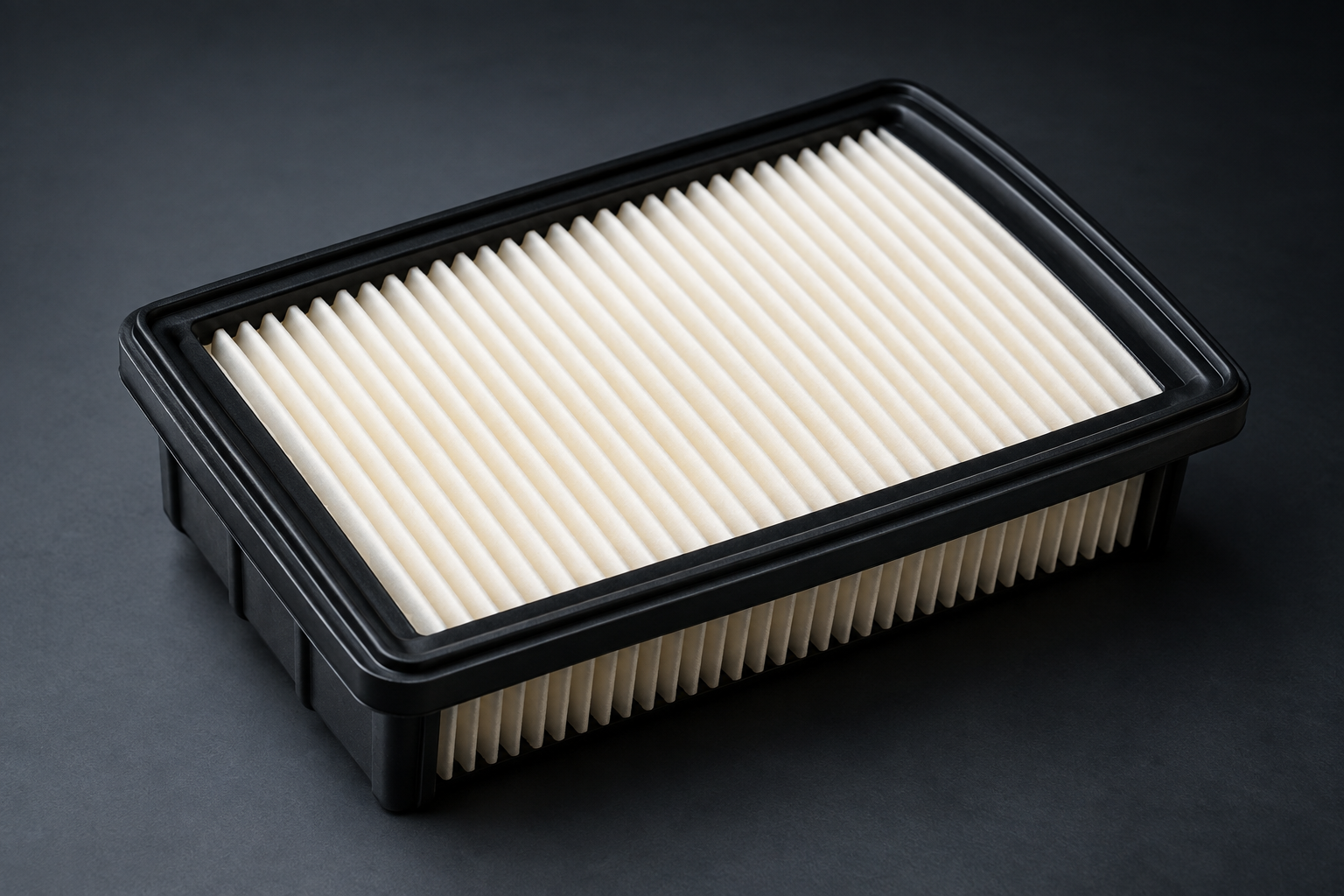
A car air filter is a filtering element located in the engine’s air intake system.
Its main job is to prevent dust, dirt, sand, insects, and other particles from entering the engine.
Most modern vehicles use a pleated paper filter because its folded design provides a large filtering
surface inside a relatively small space.
Practical Tip
If you’re checking your car’s air filter, look for excessive dirt, dust, oil contamination,
or visible damage. Always follow the vehicle manufacturer’s instructions before removing it.
How Does an Air Filter Work?
The process is straightforward. When the engine runs, it draws air through the intake system.
The air reaches the air filter, where the filter material traps unwanted particles.
Clean air then continues through the intake system toward the engine.
The engine mixes this incoming air with fuel and burns the mixture inside the cylinders.
This combustion produces the energy needed to move the vehicle.
Think of It Like a Sieve
A useful way to understand an air filter is to imagine a kitchen sieve. Water can pass through,
while larger unwanted pieces are held back. A car’s air filter performs a similar job, but it is
designed specifically to allow sufficient airflow while trapping harmful particles.
Practical Tip
Avoid removing the air filter just to let more air into the engine. Running an engine without
proper filtration can allow abrasive particles to enter and potentially cause engine wear.
Why Is the Air Filter Important?
An engine needs clean air for efficient combustion. If dust and other contaminants enter the
engine, they can contribute to wear and contamination. A properly maintained air filter
helps protect the engine while allowing the intake system to supply the air it needs.
Airflow is also important. The engine is designed to operate with a particular amount of air and
fuel. A heavily restricted filter can reduce the amount of air reaching the engine, potentially
affecting performance.
Practical Tip
During routine maintenance, inspect the air filter together with other basic service items.
A few minutes of inspection can help you identify a filter that needs attention before it becomes
heavily restricted.
What Happens When an Air Filter Gets Dirty?
Over time, the air filter collects particles from the environment. Eventually, the accumulated
dirt can restrict airflow. Depending on the vehicle and how severely the filter is restricted,
you may notice reduced engine responsiveness or changes in fuel economy.
However, a dirty air filter is not always the cause of poor performance. Problems with spark plugs,
fuel delivery, sensors, ignition components, or other parts can produce similar symptoms.
Practical Tip
Don’t replace the air filter based only on reduced performance. Inspect the filter and follow the
recommended maintenance schedule. If the filter looks normal but the engine is running poorly,
have the vehicle properly diagnosed.
When Should You Replace the Air Filter?
There is no single replacement interval that applies to every car. The correct interval depends
on the vehicle manufacturer’s recommendations and the driving environment.
Cars driven frequently on dusty roads may require more frequent inspection than vehicles operating
mostly in clean urban conditions. Always check your owner’s manual for the recommended service
interval.
Practical Tip
If you regularly drive on dusty or unpaved roads, inspect the air filter more frequently rather
than waiting for the standard service interval.
Air Filter Maintenance Tips
- Check the air filter according to your vehicle’s maintenance schedule.
- Replace a damaged or excessively dirty filter.
- Use the correct replacement filter for your vehicle.
- Keep the air filter housing properly closed and sealed.
- Don’t ignore unusual engine symptoms simply because the filter looks clean.
Practical Tip
Before buying a replacement filter, confirm your car’s exact make, model, engine, and model year.
The correct fit is essential for proper filtration and airflow.
Frequently Asked Questions
What does a car air filter do?
It filters dust, dirt, and other particles from the air entering the engine while allowing
sufficient airflow for combustion.
Can a dirty air filter affect engine performance?
Yes. A severely restricted air filter can reduce airflow and may contribute to reduced engine
responsiveness. However, other mechanical or electronic problems can cause similar symptoms.
How often should I change my air filter?
The recommended interval varies by vehicle and driving conditions. Check your owner’s manual and
inspect the filter regularly, especially if you drive in dusty environments.
Can I drive without an air filter?
It is not recommended. The filter protects the engine from airborne contaminants that can cause
damage and wear.
Final Thoughts
The air filter is one of the simplest components in a car, but its job is essential.
It protects the engine from contaminants while allowing the clean air needed for combustion to enter.
Regular inspection and replacement when necessary are simple ways to help keep your engine running
properly.
