
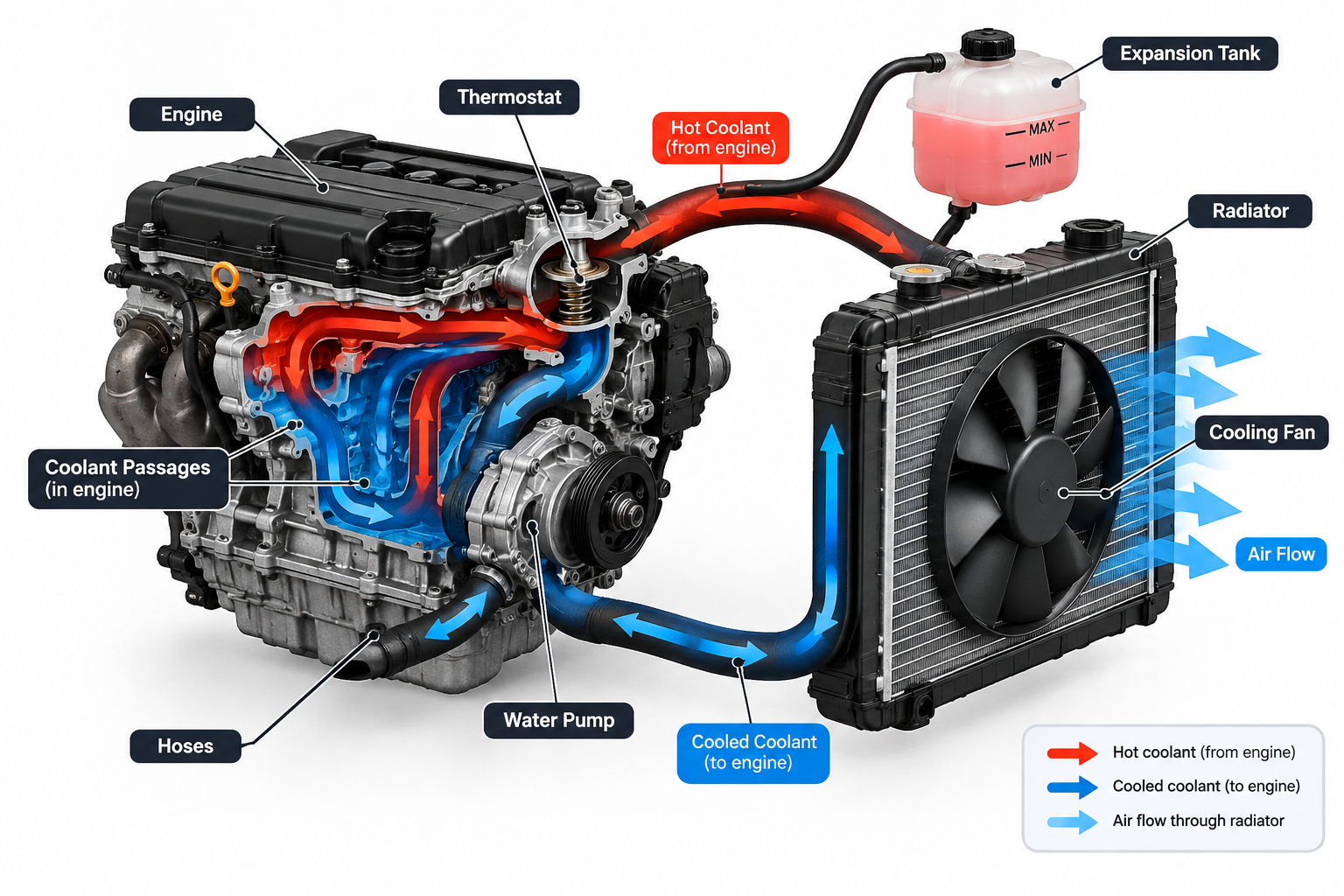
How the Car Cooling System Works
A car cooling system keeps the engine at a safe operating temperature.
It removes excess heat produced during combustion and prevents the engine
from overheating. The main parts include the radiator, coolant, water pump,
thermostat, cooling fan, hoses, and expansion tank.
Table of Contents
How Does a Car Cooling System Work?
When the engine runs, combustion creates a large amount of heat. Coolant
circulates through passages around the engine cylinders and absorbs this heat.
The hot coolant then travels to the radiator, where the heat is released into
the surrounding air. The cooled coolant returns to the engine and the cycle
continues.
Main Parts of the Cooling System
The main components of a car cooling system are:
- Radiator: Removes heat from the coolant.
- Coolant: Transfers heat away from the engine.
- Water Pump: Circulates coolant through the system.
- Thermostat: Controls coolant flow based on engine temperature.
- Cooling Fan: Moves air through the radiator when needed.
- Hoses: Carry coolant between the engine and radiator.
- Expansion Tank: Holds coolant as it expands and contracts.
How Coolant Flows Through the Engine
The water pump pushes coolant through passages inside the engine. The coolant
absorbs heat from the engine and becomes hotter. Depending on the thermostat’s
position, the coolant either circulates within the engine or flows toward the
radiator for cooling.
How the Thermostat Works
The thermostat regulates the engine’s temperature. When the engine is cold,
the thermostat stays closed to help the engine warm up quickly. As the coolant
reaches its operating temperature, the thermostat opens and allows coolant to
flow through the radiator.
How the Radiator Works
Hot coolant enters the radiator and flows through small tubes surrounded by
cooling fins. Air passing through the fins removes heat from the coolant.
The cooled coolant then returns to the engine to absorb more heat.
How the Water Pump Works
The water pump keeps coolant moving through the cooling system. In many cars,
it is driven by the engine, while some modern vehicles use an electric water
pump. Continuous coolant circulation helps control engine temperature.
How the Cooling Fan Works
The cooling fan pulls or pushes air through the radiator. It is especially
important when the car is stopped or moving slowly, when natural airflow is
limited. The engine control system can turn the fan on when additional cooling
is required.
What Causes a Car to Overheat?
Common causes of engine overheating include low coolant, coolant leaks, a
faulty thermostat, a damaged water pump, a blocked radiator, or a cooling fan
problem. An overheating engine should be inspected promptly because excessive
heat can cause serious engine damage.

