
What Does a Transmission Do?
The engine produces power at different speeds, but the wheels need different amounts of power depending on whether the car is starting, accelerating, or cruising. The transmission uses different gears to control this power and speed.
How Does a Car Transmission Work?
When you press the accelerator, the engine sends power to the transmission. The transmission selects an appropriate gear and transfers that power to the driveshaft and wheels.
Lower gears provide more torque, which helps the car start and climb hills. Higher gears allow the car to travel faster while keeping the engine running at lower RPM.
Automatic vs. Manual Transmission
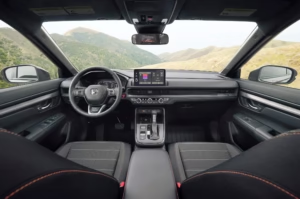
A manual transmission requires the driver to select gears using a gear stick and operate a clutch pedal. An automatic transmission changes gears by itself using a combination of gears, hydraulics, and electronic controls.
Why Are Gears Important?
Gears allow the engine to operate efficiently at different speeds. Without a transmission, a car would have difficulty starting from a stop, accelerating, and driving efficiently at high speeds.
Simple Summary
In simple terms, a transmission is the link between the engine and the wheels. It changes gears to control how much power and speed reaches the wheels, making the car easier, smoother, and more efficient to drive.